
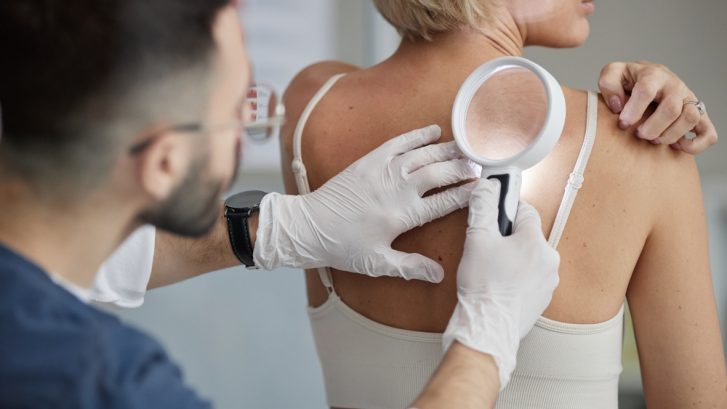
If breakouts keep coming back, an itchy rash wakes you up, or a mole starts to change, it’s time to get your skin checked. Acne, eczema, and psoriasis can each affect how you feel day to day. Some symptoms also look alike, which makes it easy to spend weeks treating the wrong problem.
Mid-Atlantic Skin Surgery Institute provides medical dermatology care in Waldorf in Charles County and in Leonardtown and Lexington Park in St. Mary’s County.
Here’s when to schedule a visit, what treatment may involve, and which symptoms need faster attention.
When to Schedule a Dermatology Appointment
Make an appointment if a skin problem keeps returning, persists despite consistent home care, or interferes with sleep, work, exercise, or other daily activities. How much skin is affected tells only part of the story. A small patch on your hand can make washing painful, and a few deep pimples can leave permanent scars.
Acne often causes whiteheads, blackheads, inflamed pimples, or deep, tender bumps. Painful breakouts or early scarring are reasons to book sooner.
Eczema often causes dry, itchy, cracked skin. Recurring rashes, nighttime itching, or symptoms that seem tied to a product or workplace exposure deserve a closer look.
Psoriasis can cause raised, scaly patches, especially on the scalp, elbows, or knees. Persistent patches, nail changes, or joint symptoms are worth discussing with your dermatologist.
Acne Treatment in St. Mary’s County
A consistent over-the-counter routine can help mild acne. If you’ve used a product as directed for several weeks and still see little improvement, a dermatologist can help you decide what to try next. Schedule sooner for deep, painful bumps or scarring. Flat dark or reddish marks can linger after a breakout, while true scars change the texture of the skin. Tell your dermatologist which changes concern you so you can discuss what treatment can realistically improve.
At your visit, your provider can examine your skin to see whether acne or a similar-looking condition, such as rosacea or folliculitis, is causing the bumps.
Depending on the type and severity of acne, treatment may include benzoyl peroxide, a topical retinoid, or an oral medication. Mention what you’ve already tried, what irritated your skin, and whether you’re pregnant or planning pregnancy, since that can affect which medicines are appropriate.
Explore our acne treatment services and the American Academy of Dermatology’s guide to acne diagnosis and treatment.
Eczema Treatment in St Mary’s County
An itchy patch that clears and returns, cracks with repeated handwashing, or keeps you up at night is worth evaluating. Atopic dermatitis is a common form of eczema. Contact dermatitis can develop after skin comes into contact with an irritant or allergen, such as a cleanser, fragrance, or adhesive. Inflammation can look red, violet, brown, or gray depending on your skin tone.
A dermatologist can examine the rash and ask about where and when it flares. If an allergy to something touching your skin is suspected, patch testing may help identify the trigger. For atopic dermatitis, a fragrance-free cream or ointment and shorter, lukewarm showers may help manage dryness.
When more treatment is needed, options can include prescription corticosteroids or nonsteroidal creams. For more difficult-to-control atopic dermatitis, your dermatologist may discuss supervised light therapy or medication that works throughout the body.
Learn about our rash evaluations and the American Academy of Dermatology’s atopic dermatitis treatment options.
Psoriasis Treatment in Charles County
Psoriasis is an immune-mediated condition that speeds up skin cell turnover. Plaque psoriasis commonly causes thick, scaly areas that may itch, burn, or crack. Patches may look pink or red on lighter skin and violet, gray, or brown on darker skin. Psoriasis in skin folds may have little visible scale, and nail psoriasis can cause pitting, thickening, or lifting of the nail.
Your dermatologist may check your skin, scalp, and nails and ask about family history, prior flares, and any joint symptoms. A small skin biopsy can help when the diagnosis is unclear. Treatment depends on where psoriasis appears, how much skin it affects, and how it interferes with daily life. Prescription topical medications can help with limited psoriasis. Supervised light therapy, oral medication, or biologics may be considered for more extensive or difficult-to-control disease.
Tell your provider if you’ve noticed joint swelling, pain, or morning stiffness, even if your skin symptoms are mild. These can be signs of psoriatic arthritis, and early evaluation can help protect your joints. Read about our psoriasis care in Waldorf and the American Academy of Dermatology’s guide to psoriatic arthritis symptoms.
When a Rash or Changing Spot Needs Prompt Care
Seek prompt medical care for a rash that spreads quickly, becomes painful, blisters, develops open sores, or comes with a fever. Increasing warmth, swelling, pain, pus, or yellow crusting can signal infection.
A rash affecting the eyes, lips, mouth, or genital skin also warrants prompt assessment. Seek emergency care immediately if a rash comes with difficulty breathing or swallowing or swelling of the lips or eyes. See the American Academy of Dermatology’s warning signs that a rash needs medical attention.
Call promptly for a skin exam if a mole or spot changes in size, shape, or color, looks different from your other spots, repeatedly bleeds, or fails to heal. Your dermatologist can examine the area and determine whether a biopsy is needed. Learn more about our mole evaluations.
Frequently Asked Questions
Can eczema and psoriasis look alike?
Yes. Both can cause itchy, scaly patches, and their color can vary with skin tone. The location of the rash, how it changes over time, and whether your scalp or nails are involved can help your dermatologist tell them apart.
Can I see a dermatologist for acne even if my breakouts are mild?
Yes. Recurring breakouts, lingering discoloration, and irritation from products are all reasons to seek care. Your provider can review your routine and help you build a plan you can stick with.
What should I bring to my dermatology appointment?
Bring a list of your medications and skin products, including what you’ve tried and for how long. Note when symptoms started, what makes them worse, and whether they disrupt sleep or daily activities. If symptoms come and go, bring photos taken during a flare.
Schedule a Dermatology Appointment in Southern Maryland
If acne keeps flaring, itching interrupts your sleep, or a spot has changed, call Mid-Atlantic Skin Surgery Institute to schedule a medical dermatology visit. Tell us what you’re experiencing and which office works best for you. At your visit, we’ll examine your skin, discuss what may be causing your symptoms, and explain your treatment and follow-up options.
Waldorf (Charles County) — 301-396-3401
Leonardtown (St. Mary’s County) — 301-475-8091
Lexington Park (St. Mary’s County) — 240-237-8268
Request a dermatology appointment online.